Solar GeneratorsComparison
Best Solar Generators for Home Backup Power: 2026 Update
We compared the top solar generators for home backup in 2026 — capacity, output, expandability, and value. Picks from EcoFlow, Bluetti, Anker, and Jackery.
By Editorial Team2 min read
Affiliate Disclosure: This article contains affiliate links. We may earn a commission if you purchase through these links, at no extra cost to you. Our editorial recommendations are independent of these partnerships. Learn about our editorial standards.
Key Takeaways
- 1EcoFlow Delta Pro Ultra remains the #1 whole-home backup — now with improved Smart Home Panel 2 integration
- 2Anker SOLIX F2000 is the new value champion at ~$1,699 — best balance of capacity and price for most families
- 3LiFePO4 battery prices dropped 15% in 2026 — all top picks now use this superior chemistry standard
- 4The 30% IRA tax credit makes solar generators significantly more affordable — a $3,000 system costs $2,100 after credit
- 5UPS mode with <20ms switchover is now standard on all premium models — essential for fridge and medical devices
Introduction
In the first six weeks of 2026, the evidence for investing in home backup power has only grown stronger. Winter Storm Fern left 750,000 households without power. CISA's Volt Typhoon warnings put grid vulnerability on the front page. And Strait of Hormuz disruptions sent Brent crude up 13% to $82 per barrel.
The case for a solar generator — no fuel to stockpile, no fumes, no noise, no supply chain dependency — has never been cleaner. This guide covers the best models for home backup use in 2026.
Key Takeaways
- Whole-home essential circuits: EcoFlow Delta Pro Ultra ($3,699) — 6,000W output, expandable to 90kWh
- Best expandable system: Bluetti AC300+B300 — modular batteries with 3,000W output
- Best value for most families: Anker SOLIX F2000 — 2,048Wh, 2,200W output at mid-range price
- Best portable option: Jackery Explorer 2000 Plus — 3,000W AC output
- Budget starter pick: Jackery Explorer 1000 Plus ($999) — handles phones, laptops, lights, router
- All top 2026 picks use LiFePO4 battery chemistry — safer and longer-lasting
Our Top Picks at a Glance
Best Solar Generators for Home Backup 2026
| Feature | |||||
|---|---|---|---|---|---|
| Price | ~$3,699 | ~$3,299 | ~$1,799 | ~$1,999 | ~$1,399 |
| Capacity | 6,144Wh | 3,072Wh | 2,048Wh | 2,042Wh | 2,048Wh |
| AC Output | 7,200W | 3,000W | 2,200W | 3,000W | 2,200W |
| Solar Input | 5,600W | 2,400W | 1,000W | 1,000W | 900W |
| Best For | Whole-home backup | Expandable system | Best value mid-size | Reliable portable | Proven workhorse |
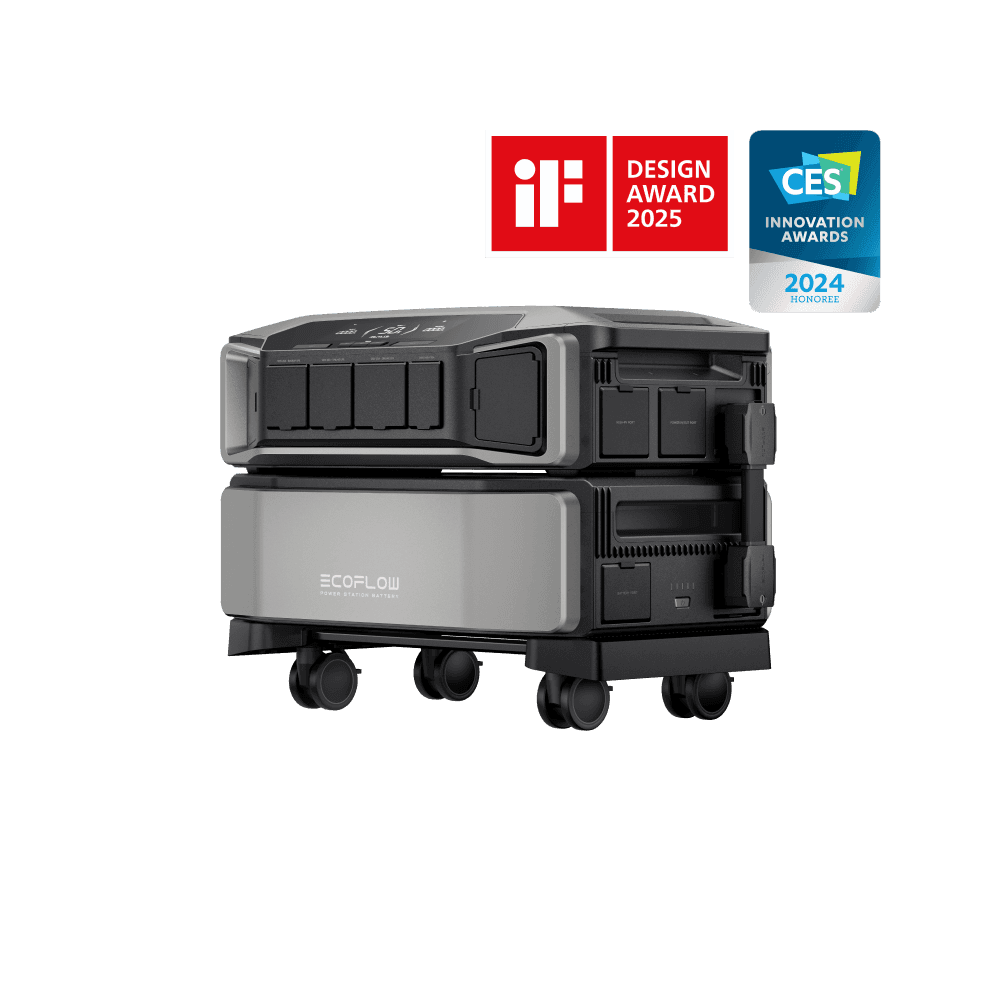
EcoFlow Delta Pro Ultra
~$3,699
- Capacity
- 6,144Wh
- AC Output
- 7,200W
- Solar Input
- 5,600W
- Best For
- Whole-home backup
Bluetti AC300 + B300
~$3,299
- Capacity
- 3,072Wh
- AC Output
- 3,000W
- Solar Input
- 2,400W
- Best For
- Expandable system
Anker SOLIX F2000
~$1,799
- Capacity
- 2,048Wh
- AC Output
- 2,200W
- Solar Input
- 1,000W
- Best For
- Best value mid-size
Jackery Explorer 2000 Plus
~$1,999
- Capacity
- 2,042Wh
- AC Output
- 3,000W
- Solar Input
- 1,000W
- Best For
- Reliable portable
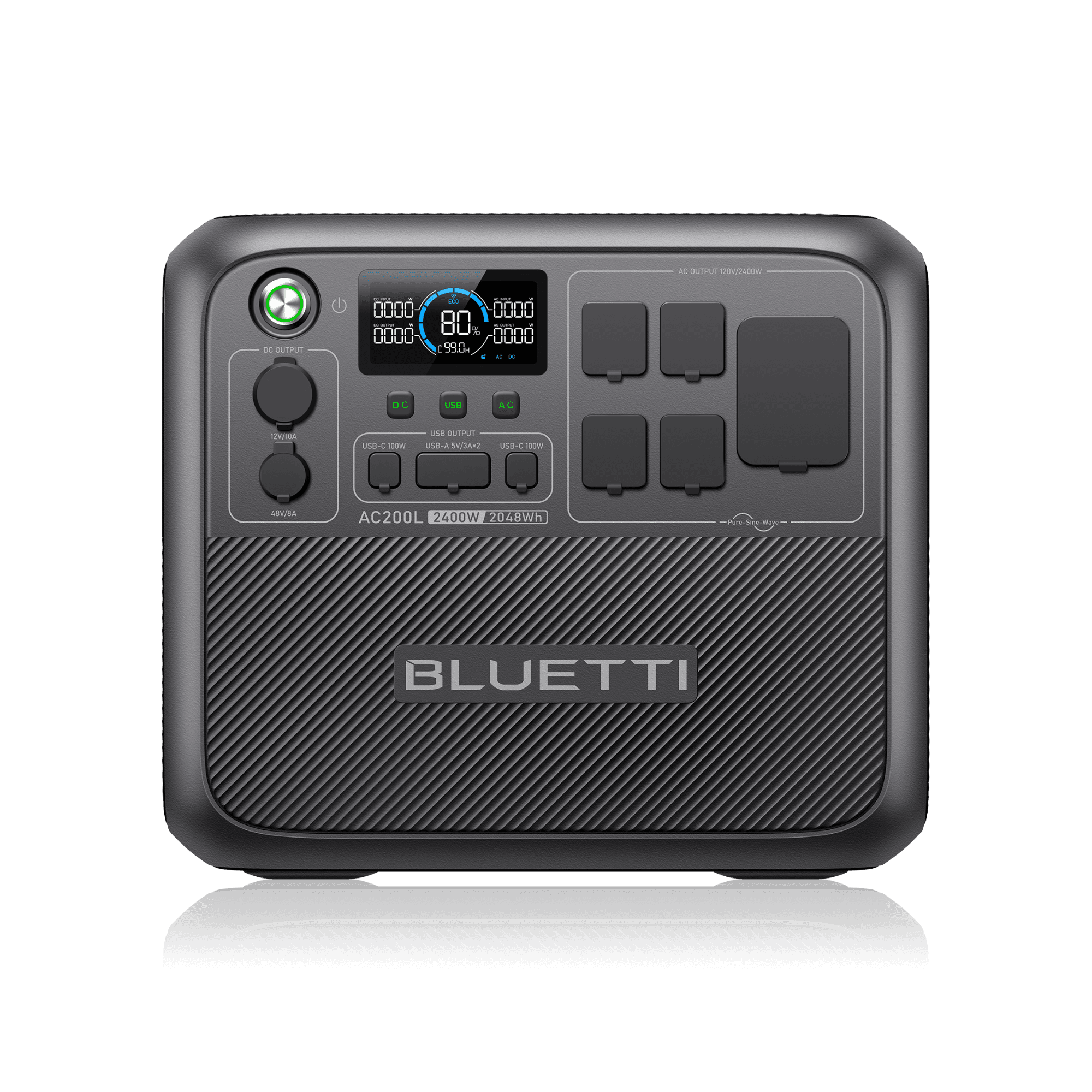
Bluetti AC200MAX
~$1,399
- Capacity
- 2,048Wh
- AC Output
- 2,200W
- Solar Input
- 900W
- Best For
- Proven workhorse
What to Look for in a Home Backup Solar Generator
Battery capacity (Wh) determines runtime. AC output (watts) determines what you can run simultaneously. Solar input determines recharge speed. For home backup, 2,000Wh is the practical minimum for most families.
LiFePO4 vs. NMC: Why Battery Chemistry Matters
LiFePO4 (lithium iron phosphate) batteries offer 3,000–6,000 cycle life (10+ years), better thermal stability, and no thermal runaway risk compared to older NMC lithium-ion. For a device you plan to keep for 10+ years, LiFePO4 is the right choice. Verify battery chemistry before purchasing any unit not on this list.
Best Overall — EcoFlow Delta Pro Ultra
The most capable solar generator for whole-home backup. 6,144Wh expandable to 90kWh, 7,200W output handles central air conditioning, and 5,600W solar input recharges in a single sunny day. Connects to your home panel via Smart Home Panel 2.
EcoFlow Delta Pro Ultra
Pros
- Industry-leading 7,200W AC output handles whole-home essential circuits
- 6,144Wh base; expandable to 90kWh for multi-day whole-home backup
- 5,600W solar input for fast recharging
- Smart Home Panel integration for automatic grid-to-generator transfer
- LiFePO4 chemistry with 4,000+ cycle rating
Cons
- Premium price (~$3,699) — one of the most expensive consumer solar generators
- Heavy; requires permanent or semi-permanent placement
- Full home panel integration requires additional Smart Home Panel 2
Best Expandable System — Bluetti AC300 + B300
The AC300 is an inverter/management unit paired with B300 battery modules (3,072Wh each). Start with one B300, add up to four for 12,288Wh. Dual-AC300 configurations reach 24,576Wh. 3,000W output handles refrigerators, medical devices, and more.
Bluetti AC300 + B300
Pros
- Best-in-class modularity — add batteries up to 12,288Wh per AC300
- 3,000W continuous output handles all essential home appliances
- Strong Bluetti customer support and 5-year warranty on battery modules
- LiFePO4 chemistry with 3,500+ cycle rating
Cons
- AC300 has no battery without B300 — must purchase together
- Heavier and larger footprint than all-in-one units
- Less intuitive setup for first-time users
Best Value Mid-Size — Anker SOLIX F2000
Best combination of capacity, output, and price. 2,048Wh LiFePO4, 2,200W output, expandable with B2000 module to 4,096Wh. Anker's two-decade reputation for quality electronics hardware carries into the SOLIX line.
Anker SOLIX F2000
Pros
- Excellent value — 2,048Wh and 2,200W output at competitive mid-range price
- Anker's well-established quality reputation and warranty support
- Expandable with B2000 module to 4,096Wh
- LiFePO4 chemistry; 3,000+ cycle rating; compact design
Cons
- 2,200W output doesn't match 3,000W competitors at similar prices
- 1,000W solar input slower than premium alternatives
- Primarily direct-to-consumer; fewer retail locations
Best Reliable Portable — Jackery Explorer 2000 Plus
3,000W continuous output — the highest in this price range. Handles window AC units and power tools. Expandable to 12,000Wh. Stocked at Costco, REI, and Best Buy.
Jackery Explorer 2000 Plus
Pros
- 3,000W output handles window AC, heaters, and high-draw appliances
- Wide retail availability (Costco, REI, Best Buy)
- LiFePO4 battery with 4,000-cycle rating; expandable via BP-2000
- Strong app integration and user experience
Cons
- Slightly heavier than similarly-specced competitors
- 1,000W solar input — similar to competitors but below premium units
- Higher price than Anker SOLIX F2000 despite similar capacity
Best Proven Workhorse — Bluetti AC200MAX
Strong long-term reliability data from 2022–2025 purchasers. 2,048Wh, 2,200W output, expandable to 8,192Wh with B300 modules. At ~$1,399, excellent value.
Bluetti AC200MAX
Pros
- Proven multi-year reliability track record
- Good expansion options: B230 and B300 compatible
- Competitive pricing at ~$1,399 for 2,048Wh
- LiFePO4 chemistry with 3,500+ cycle rating
Cons
- 900W max solar input is the lowest — slower solar recharging
- Older design; competitors offer better interfaces
- Heavier than some competitors at equivalent capacity
Best Starter Pick — Jackery Explorer 1000 Plus
The right entry point at ~$999. 1,264Wh LiFePO4, 2,000W output. Powers phones, tablets, laptops, LED lights, and router for days. Expandable with BP-1000 module.
Jackery Explorer 1000 Plus
Pros
- Accessible price (~$999) for LiFePO4 chemistry
- 2,000W AC output handles more than most at this price
- Wide retail availability; expandable via BP-1000
- Compact and lightweight for the capacity offered
Cons
- 1,264Wh insufficient for refrigerator backup beyond a few hours
- Not suitable for running window AC or high-draw appliances
- 500W solar input means slower recharging
Related: Solar Generator vs. Gas Generator — Full Comparison
For a detailed side-by-side comparison including total cost of ownership, maintenance requirements, and which scenarios favor each type, see our full Solar Generator vs Gas Generator comparison.
Frequently Asked Questions
How long will a solar generator power a refrigerator?
A standard refrigerator averages ~150W. Divide your generator's Wh capacity by 150, then reduce by 15% for inverter loss. A 2,048Wh unit provides ~11–13 hours. The EcoFlow Delta Pro Ultra at 6,144Wh: 35–40 hours. Solar panels extend runtime during daylight.
Can a solar generator power an entire house?
Not typically every device simultaneously. A 6,000W+ unit handles essential circuits — refrigerator, lights, fans, devices, router, and a window AC. Running central HVAC and electric stoves simultaneously requires utility-scale power.
Are solar generators safe to use indoors?
Yes — no exhaust, no carbon monoxide, no fuel fumes. They can be safely used in any ventilated indoor space. This is a key advantage over gas generators.
EcoFlow Delta Pro Ultra
9.5
out of 10Capacity10.0
Recharge Speed9.5
Portability6.0
Expandability10.0
Value8.5
Our Verdict
Still the king of home backup power in 2026. Unmatched expandability to 90kWh and Smart Home Panel 2 integration set it apart from all competitors.
Anker SOLIX F2000
9.0
out of 10Capacity8.5
Recharge Speed8.5
Portability8.0
Expandability8.0
Value9.5
Our Verdict
The 2026 value champion. Excellent capacity and UPS mode at a price point that makes serious home backup accessible to most families.
Bluetti AC300 + B300
8.8
out of 10Capacity9.0
Recharge Speed8.5
Portability7.0
Expandability9.5
Value8.5
Our Verdict
Best modular system for flexible installation. The separate inverter and battery design allows creative placement options for different home layouts.
Frequently Asked Questions
Bottom Line
For most families: the Anker SOLIX F2000 at ~$1,799 delivers the best value-to-performance ratio. For serious preparedness: the EcoFlow Delta Pro Ultra or Bluetti AC300+B300. For first-time buyers: the Jackery Explorer 1000 Plus at ~$999.
Grid reliability concerns will only increase in 2026 and beyond. The right time to invest in home backup power was last year; the second-best time is now.
best solar generator home backup 2026solar generator for home backup powerportable solar generator home usesolar backup generator reviewsLiFePO4 solar generatorsolar generator vs gas generatorhome battery backup
Where to Buy
We may earn a commission when you purchase through these links, at no extra cost to you. This supports our independent research.
Related Articles
Solar Generators
Comparison
Solar Generator vs Gas Generator: Which Is Better for Hurricane Season 2026?
Compare solar generators and gas generators for hurricane season 2026 — upfront costs, runtime, safety, and total cost of ownership with our top three solar picks.
Read more →
Solar Generators
Comparison
Best Home Battery Backup Systems: Solar + Storage for Grid Independence (2026)
The top solar + battery backup systems for 2026 compared: capacity, solar input, cost, and IRA tax credit eligibility.
Read more →
Solar Generators
Comparison
Best Portable Power Stations for Home Emergencies (2026 Review)
Our hands-on comparison of the 5 best portable power stations for 2026 home emergencies — capacity, charge speed, and real-world runtime compared.
Read more →