Solar GeneratorsComparison
Solar Generator vs Gas Generator: Which Is Better for Hurricane Season 2026?
Compare solar generators and gas generators for hurricane season 2026 — upfront costs, runtime, safety, and total cost of ownership with our top three solar picks.
By Editorial Team5 min read
Affiliate Disclosure: This article contains affiliate links. We may earn a commission if you purchase through these links, at no extra cost to you. Our editorial recommendations are independent of these partnerships. Learn about our editorial standards.
Key Takeaways
- 1Solar generators win for hurricanes: silent operation, zero emissions, no fuel storage, and safe for indoor use
- 2EcoFlow Delta Pro Ultra is our top solar pick — 6,144Wh base capacity powers a home for 2-3 days after a storm
- 3Gas generators cost $500-1,000/year in fuel vs $0 for solar after purchase — solar pays for itself in 3-5 years
- 4Never run a gas generator indoors or in a garage — carbon monoxide kills hundreds of Americans annually during storms
Introduction
When fuel prices are rising and hurricane season is on the horizon, the question isn't just which generator to buy — it's whether a gas-powered unit still makes sense at all.
Brent crude climbed 13% to $82 per barrel in late February 2026, following US-Israel strikes on Iranian nuclear facilities and a 70% drop in tanker traffic through the Strait of Hormuz. Analysts at Goldman Sachs and JP Morgan have flagged $100-per-barrel scenarios as increasingly plausible heading into summer.
For families evaluating generator options before the season begins, rising fuel costs have shifted the math in favor of solar generators in a meaningful way. This guide breaks down the real differences — upfront costs, runtime, safety, and total cost of ownership — and recommends the three best solar generators for hurricane preparedness in 2026.
Key Takeaways
- Gas generators cost $400–$1,500 upfront but require ongoing fuel purchases that become expensive and unreliable during storms.
- Solar generators cost more upfront ($1,699–$5,799) but run on sunlight with near-zero operating costs.
- At projected 2026 fuel prices ($4.50–$5.50/gallon), a gas generator running 8 hours/day for 7 days costs roughly $190–$310 in fuel per hurricane event.
- Solar generators are safe to run indoors; gas generators produce lethal carbon monoxide and must always be used outdoors.
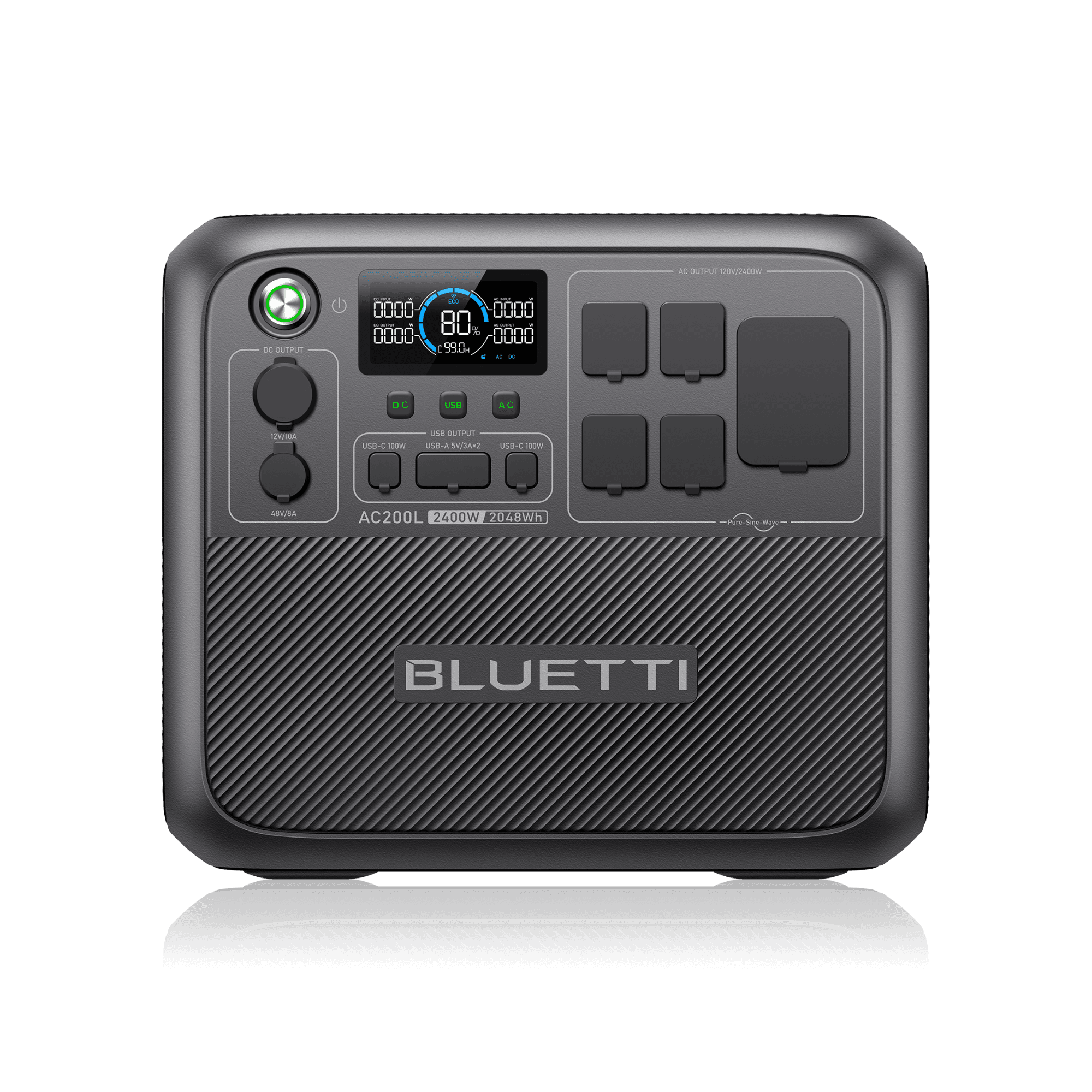
- Our top solar pick for most families: the Bluetti AC200MAX ($1,699) — strong capacity, expandable, and priced for real-world budgets.
Solar Generator vs Gas Generator: The Core Trade-offs
A solar generator is a lithium battery pack with a built-in inverter and charge controller. You charge it from solar panels, a wall outlet, or your car — and it powers AC and DC devices silently, with no emissions. A gas generator runs an internal combustion engine on gasoline, produces significantly more output wattage, but requires fuel and produces carbon monoxide.
Neither type is universally better. The right choice depends on your home's power needs, your local storm risk, and how many days you're realistically preparing for.
Solar vs Gas Generator: Head-to-Head
| Feature | ||
|---|---|---|
| Price | $1,699–$5,799 | $400–$1,500 |
| Annual Fuel Cost | $0 (sunlight) | $200–$400/season (estimated) |
| Noise Level | Near-silent (≤30 dB) | 60–80 dB |
| CO Risk | None — safe indoors | High — outdoor use only |
| Best For | Multi-day outages, silent operation, urban/suburban homes | High-wattage loads, budget entry, unlimited runtime with fuel |
Solar Generator
$1,699–$5,799
- Annual Fuel Cost
- $0 (sunlight)
- Noise Level
- Near-silent (≤30 dB)
- CO Risk
- None — safe indoors
- Best For
- Multi-day outages, silent operation, urban/suburban homes
Gas Generator
$400–$1,500
- Annual Fuel Cost
- $200–$400/season (estimated)
- Noise Level
- 60–80 dB
- CO Risk
- High — outdoor use only
- Best For
- High-wattage loads, budget entry, unlimited runtime with fuel
Safety: The Carbon Monoxide Problem
Every hurricane season, the CDC reports a surge in carbon monoxide poisoning deaths tied to improper generator use. Hundreds of Americans are hospitalized or killed each year when gas generators are run in garages, on covered porches, or near open windows. CO is odorless and colorless, and symptoms can appear within minutes.
Solar generators produce zero emissions. You can run one in your living room, bedroom, or garage without any ventilation requirements. For families with young children, elderly members, or people with respiratory conditions, this safety gap is often the deciding factor.
Runtime: The Honest Comparison
Gas generators can run continuously as long as you have fuel. That's a genuine advantage for very long outages. But fuel logistics during a major hurricane are often more difficult than people anticipate.
After major storms, gas stations run dry within hours. FEMA has documented fuel shortages lasting 5–10 days after significant hurricane landfalls. Solar generators are limited by battery capacity — but in sunny post-storm conditions, a properly sized solar input can fully recharge a 2,000Wh battery in 3–4 hours.
5-Year Total Cost of Ownership
Gas generator scenario (3,500W unit): Upfront ~$600 + Fuel ~$598 (126 gallons × $4.75/gal over 5 years) + Maintenance ~$250 = 5-year total ~$1,450.
Solar generator scenario (Bluetti AC200MAX): Upfront ~$1,699 + Optional solar panel ~$329 + Fuel $0 + Maintenance minimal = 5-year total ~$2,028 — but you also have a year-round power source for camping, outages, and off-grid use. The gap narrows significantly if fuel prices reach $6+/gallon.
Why 2026 Is the Year to Reconsider Gas
The economic case for solar generators has strengthened noticeably in early 2026. Tensions in the Strait of Hormuz — through which 21% of global oil passes — remain elevated. While spot fuel prices fluctuate, the supply chain uncertainty tends to be most acute exactly when you need fuel most: right before and after a major storm.
The practical implication for hurricane preparedness is straightforward. A solar generator doesn't care what's happening with oil markets on the day you need to power your refrigerator.
The 3 Best Solar Generators for Hurricane Season 2026
Top Solar Generators for Hurricane Preparedness
| Feature | |||
|---|---|---|---|
| Price | ~$5,799 | ~$1,699 | ~$1,999 |
| Capacity | 6,144Wh (expandable) | 2,048Wh (expandable to 8,192Wh) | 2,042.8Wh (expandable to 12,000Wh) |
| AC Output | 7,200W | 2,200W | 3,000W |
| Max Solar Input | 2,600W | 900W | 1,000W |
| Best For | Whole-home partial backup, power-hungry appliances | Most families — strong value, expandable system | Higher output needs, portability, future expandability |
EcoFlow Delta Pro Ultra
~$5,799
- Capacity
- 6,144Wh (expandable)
- AC Output
- 7,200W
- Max Solar Input
- 2,600W
- Best For
- Whole-home partial backup, power-hungry appliances
Bluetti AC200MAX
~$1,699
- Capacity
- 2,048Wh (expandable to 8,192Wh)
- AC Output
- 2,200W
- Max Solar Input
- 900W
- Best For
- Most families — strong value, expandable system
Jackery Explorer 2000 Plus
~$1,999
- Capacity
- 2,042.8Wh (expandable to 12,000Wh)
- AC Output
- 3,000W
- Max Solar Input
- 1,000W
- Best For
- Higher output needs, portability, future expandability
EcoFlow Delta Pro Ultra
The EcoFlow Delta Pro Ultra is the most capable residential solar generator on the market. Its 6,144Wh base capacity — expandable to over 21kWh — paired with 7,200W of AC output means it can handle a central air conditioner, full-size refrigerator, and multiple other loads simultaneously.
EcoFlow Delta Pro Ultra
Pros
- 6,144Wh base capacity — powers a full-size refrigerator for ~40 hours per charge
- 7,200W output handles most household appliances simultaneously, including window AC units
- Industry-leading 2,600W solar input recharges fully in under 3 hours in good conditions
- LFP battery chemistry offers 3,500+ charge cycles and superior thermal stability
Cons
- ~$5,799 is a significant upfront investment — roughly 3–4x the cost of a comparable gas generator
- Heavy at 124 lbs; not a product you'll carry to a campsite
- Maximum ROI requires purchasing add-on solar panels separately
Bluetti AC200MAX
The Bluetti AC200MAX is our top pick for most families. At ~$1,699, it balances genuine capacity (2,048Wh), strong output (2,200W), and future expandability — you can add up to three B230 expansion batteries to reach 8,192Wh total.
Bluetti AC200MAX
Pros
- 2,048Wh base capacity with expandability to 8,192Wh via B230 batteries
- 2,200W output handles refrigerators, window fans, medical devices, and multiple chargers
- 900W solar input recharges from empty to full in ~3–4 hours
- LFP battery chemistry: 3,500+ rated charge cycles
- Priced at ~$1,699 — the most capable unit under $2,000 from a major brand
Cons
- Base 2,048Wh won't power central AC; this is a targeted essentials generator
- 900W maximum solar input means recharging takes longer in overcast conditions
- At 61 lbs, it's portable but not lightweight
Jackery Explorer 2000 Plus
The Jackery Explorer 2000 Plus competes directly with the Bluetti AC200MAX but leans more toward higher burst output and long-term expandability. Its 3,000W continuous AC output handles more demanding loads — including 10,000 BTU window air conditioners.
Jackery Explorer 2000 Plus
Pros
- 3,000W continuous / 6,000W surge output — handles window AC units and high-draw appliances
- Expandable to 12,000Wh total capacity via Jackery's battery pack ecosystem
- 1,000W solar input is slightly faster than the Bluetti AC200MAX at the same price tier
- 43.7 lbs base unit — more portable than the Bluetti AC200MAX
Cons
- ~$1,999 base price; full expandability requires significant additional investment
- LCD display is less informative than EcoFlow's app ecosystem
- Solar panels sold separately; budget an additional $300–$600 for a capable panel array
When a Gas Generator Still Makes Sense
Solar generators aren't the right answer for every household. If your home runs on electric heat, a well pump, or has a central air system larger than a window unit, the wattage demands may exceed what any consumer solar generator can handle.
If your budget is under $700, a dual-fuel gas generator offers more raw output and runtime flexibility than any solar generator in that price range. And if you live in a heavily wooded area with frequent overcast post-storm conditions, solar recharging speed may be unreliable.
Gas Generator Safety Reminder
Gas generators must never be operated indoors, in a garage, or within 20 feet of any door, window, or vent — even if the garage door is open. Carbon monoxide can reach lethal concentrations in enclosed spaces within minutes. Install battery-operated CO detectors on every level of your home if you own a gas generator.
Runtime Analysis: How Long Can Each Power Your Home?
- Refrigerator (average 150W): A Bluetti AC200MAX (2,048Wh) powers a typical refrigerator for approximately 13 hours on a single charge, or indefinitely with daily solar recharging.
- Window air conditioner (1,000W avg): The Jackery Explorer 2000 Plus can run a 10,000 BTU window AC for approximately 2 hours per charge.
- LED lighting + device charging (100W total): Any solar generator in this guide can handle this for 12–20+ hours per charge.
- Gas generator comparison: A 3,500W gas unit at 50% load consumes ~0.75 gal/hr. Over 7 days at 8 hrs/day: ~$200 in fuel at $4.75/gallon.
Frequently Asked Questions
Can a solar generator power a refrigerator during a hurricane?
Yes. A solar generator with 2,000Wh+ of capacity can power a standard full-size refrigerator for 12–18 hours on a single charge. With 400–600W of solar panels recharging during daylight hours, you can maintain continuous operation through a multi-day outage.
Are solar generators powerful enough to run an air conditioner?
It depends on the unit. The Jackery Explorer 2000 Plus (3,000W output) can run a 10,000 BTU window AC. Running AC continuously will drain a 2,000Wh battery in about 2 hours, so most people cycle the AC on and off. The EcoFlow Delta Pro Ultra (7,200W, 6,144Wh) is better suited for extended AC use.
Is it safe to run a solar generator in the house during a storm?
Yes — solar generators produce no emissions and can be safely operated indoors. This is one of their primary advantages over gas generators, which must always be used outdoors due to carbon monoxide risk.
How do gas price spikes affect the value comparison?
Significantly. If crude oil prices reach $100/barrel and retail gas reaches $6/gallon, a 7-day hurricane scenario costs $252 in fuel rather than $200 — and fuel availability may be compromised. The higher fuel prices go, the stronger the economic case for solar generators becomes.
EcoFlow Delta Pro Ultra
9.3
out of 10Capacity10.0
Output Power9.5
Portability6.0
Recharge Options9.5
Value8.5
Our Verdict
The clear winner for hurricane season. Zero emissions, silent operation, and solar recharging after the storm make it superior to gas generators for most homes.
Frequently Asked Questions
Bottom Line
For most suburban families preparing for hurricane season 2026, a solar generator is now the smarter long-term investment — especially with fuel prices under upward pressure from supply chain disruptions.
The Bluetti AC200MAX is our top recommendation for most households. The Jackery Explorer 2000 Plus is the better pick if you need to run a window AC unit. And the EcoFlow Delta Pro Ultra is the most capable solar generator available at the consumer level.
solar generator vs gas generator hurricanebest solar generator hurricane seasonsolar generator 2026gas generator vs solarhurricane power backupemergency generatorhurricane preparedness 2026
Where to Buy
We may earn a commission when you purchase through these links, at no extra cost to you. This supports our independent research.
Related Articles

Solar Generators
Comparison
Best Solar Generators for Home Backup Power: 2026 Update
We compared the top solar generators for home backup in 2026 — capacity, output, expandability, and value. Picks from EcoFlow, Bluetti, Anker, and Jackery.
Read more →
Solar Generators
Comparison
Best Home Battery Backup Systems: Solar + Storage for Grid Independence (2026)
The top solar + battery backup systems for 2026 compared: capacity, solar input, cost, and IRA tax credit eligibility.
Read more →
Solar Generators
Comparison
Best Portable Power Stations for Home Emergencies (2026 Review)
Our hands-on comparison of the 5 best portable power stations for 2026 home emergencies — capacity, charge speed, and real-world runtime compared.
Read more →

Guides
Pillar
Hurricane Prep 2026: How to Get Ready Before the Season Starts
Get your home and family ready for the 2026 Atlantic hurricane season with this complete guide: emergency kit, power backup, home hardening, evacuation plan, and insurance checklist.
Read more →