Solar GeneratorsComparison
Best Portable Solar Generators to Beat Fuel Cost Uncertainty (2026)
With gas prices spiking and oil markets volatile, solar generators are the smarter backup power choice in 2026. Compare EcoFlow, Bluetti, Jackery, and Goal Zero.
By Editorial Team6 min read
Affiliate Disclosure: This article contains affiliate links. We may earn a commission if you purchase through these links, at no extra cost to you. Our editorial recommendations are independent of these partnerships. Learn about our editorial standards.
Key Takeaways
- 1Jackery Explorer 2000 Plus is best overall portable solar generator — 2,042Wh capacity at ~$1,599
- 2EcoFlow Delta Pro Ultra is best premium pick for maximum capacity and expandability at ~$3,499
- 3Solar generators eliminate fuel dependency — no gas lines, no price spikes, no maintenance costs
- 4Volatile oil prices make solar generators an even smarter investment in 2026 than previous years
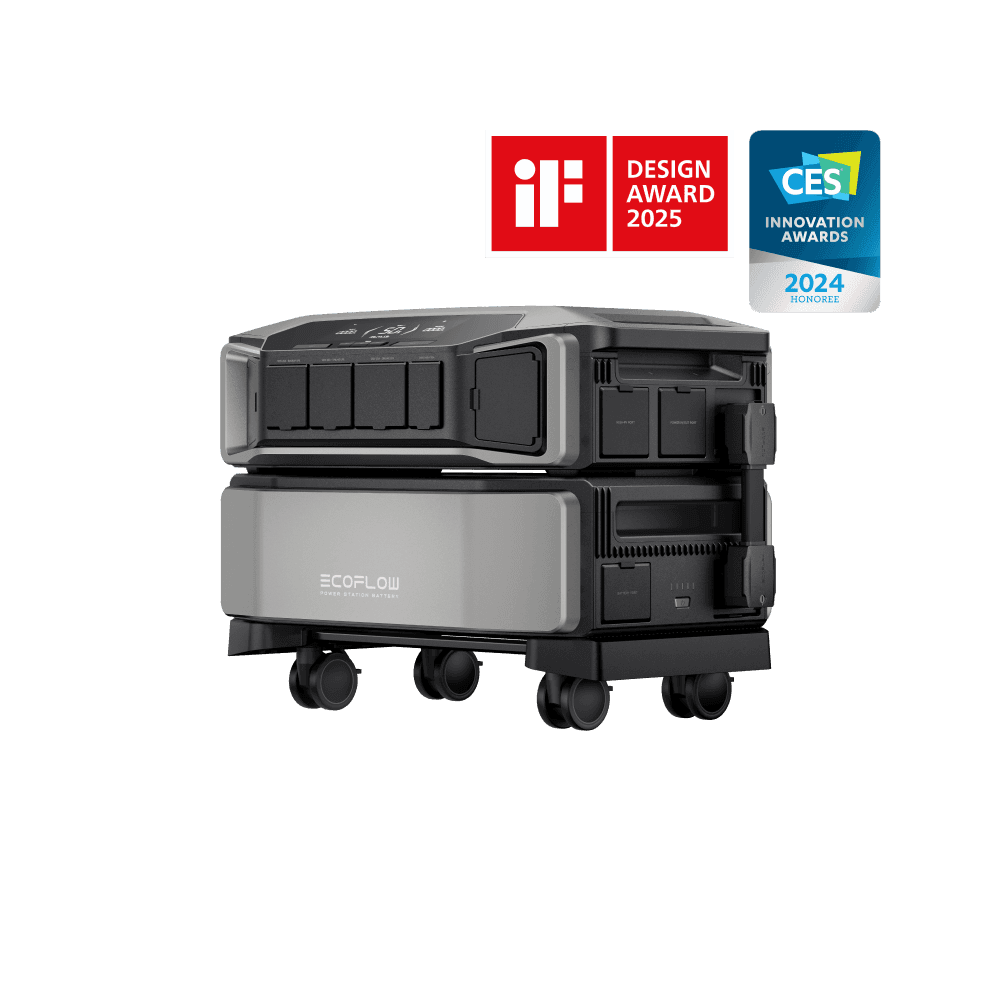
The Best Portable Solar Generators for 2026
On February 28, 2026, US and Israeli strikes on Iranian nuclear facilities set off one of the fastest oil price spikes in recent memory. With the Strait of Hormuz — responsible for approximately 21% of global oil trade — facing tanker traffic disruption, Brent crude climbed 13% to $82 per barrel within days. Energy analysts are modeling scenarios where prices could approach $100 per barrel if the situation escalates further.
For families relying on gas-powered generators for emergency backup, this creates a planning problem. Gasoline costs are directly tied to crude oil prices, and a $3.50/gallon fuel assumption can become $5.50 or $6.00+ quickly. The average gas generator running essential household loads consumes 15–20 gallons of gasoline over a 72-hour outage — a fuel cost that can triple or quadruple during a supply shock.
Solar generators — lithium battery power stations that recharge from the sun — sidestep this problem entirely. Their fuel is free. In an era of oil price volatility, that's not just convenient; it's a meaningful financial and logistical advantage.
Quick Summary
- Best overall: EcoFlow Delta Pro Ultra — highest capacity, fastest solar recharge, whole-home capable
- Best for expandability: Bluetti AC300 + B300 — modular system grows with your needs
- Best value: Jackery Explorer 2000 Plus — strongest performance-to-price ratio
- Best approachable pick: Goal Zero Yeti 1000X — simpler, trusted, well-supported
- Solar generators vs. gas: Over a 5-year horizon, a quality solar generator with 400W of panels typically reaches break-even when you account for fuel, maintenance, and oil changes.
Solar vs. Gas: The Real Cost Comparison
Before comparing specific products, it helps to understand the actual economics of solar vs. gas over time. The upfront cost of a solar generator is higher than a gas generator of comparable output — but the total cost of ownership tells a different story.
Gas vs. Solar Generator: 5-Year Cost Estimate
Gas Generator (mid-range, 3,500W): Purchase ~$600–$900. Fuel for a 72-hour outage: 15–20 gallons × $4–$6/gallon = $60–$120 per event. Annual maintenance ~$50–$100/year. Estimated 5-year total (2 outages/year): ~$2,175. Fuel cost risk: High.
Solar Generator (2,000Wh with 400W panel): Purchase ~$2,800–$3,500 (unit + panels). Fuel cost for any outage: $0. Annual maintenance: Minimal. Estimated 5-year total: $3,000–$3,500. Fuel cost risk: None.
Break-even point: Approximately 4–7 years with 2 outages per year, depending on gas prices. At $5/gallon fuel, break-even arrives faster.
The non-financial advantages are equally important. A gas generator requires storing flammable fuel, makes 65–70 dB of noise, emits carbon monoxide (must be used outdoors), and needs annual maintenance. A solar generator is silent, emission-free, safe for indoor use, and maintenance-free for years.
How We Evaluated These Solar Generators
Capacity (Wh): More watt-hours means more hours of runtime before recharging.
Solar Input (W): The maximum wattage of solar panels the unit can accept. Higher input = faster recharge from the sun.
Output Power (W): Determines what you can run simultaneously. Match this to your highest-draw appliance.
Portability: Weight and form factor matter if you plan to move the unit between locations.
Best Portable Solar Generators — 2026 Comparison
| Feature | ||||
|---|---|---|---|---|
| Price | ~$5,499 | ~$3,699 | ~$2,299 | ~$1,399 |
| Capacity | 6,144Wh (exp. to 21.5kWh) | 3,072Wh (expandable) | 2,042Wh (exp. to 12kWh) | 983Wh |
| Solar Input | 5,600W | 2,400W | 1,200W | 600W |
| Output | 7,200W | 3,000W | 3,000W | 2,000W |
| Weight | 176 lbs | ~75 lbs (AC300) | 46 lbs | 40 lbs |
| Best For | Whole-home, long outages | Modular family system | Value, portability | Occasional use, simplicity |
EcoFlow Delta Pro Ultra
~$5,499
- Capacity
- 6,144Wh (exp. to 21.5kWh)
- Solar Input
- 5,600W
- Output
- 7,200W
- Weight
- 176 lbs
- Best For
- Whole-home, long outages
Bluetti AC300 + B300
~$3,699
- Capacity
- 3,072Wh (expandable)
- Solar Input
- 2,400W
- Output
- 3,000W
- Weight
- ~75 lbs (AC300)
- Best For
- Modular family system
Jackery Explorer 2000 Plus
~$2,299
- Capacity
- 2,042Wh (exp. to 12kWh)
- Solar Input
- 1,200W
- Output
- 3,000W
- Weight
- 46 lbs
- Best For
- Value, portability
Goal Zero Yeti 1000X
~$1,399
- Capacity
- 983Wh
- Solar Input
- 600W
- Output
- 2,000W
- Weight
- 40 lbs
- Best For
- Occasional use, simplicity
EcoFlow Delta Pro Ultra: Best Overall Solar Generator
The EcoFlow Delta Pro Ultra earns its position as the best overall portable solar generator in 2026 not just for its raw capacity — though 6,144Wh is the highest in the consumer category — but specifically because of its 5,600W solar input ceiling. That's a specification no other consumer-grade unit comes close to matching.
In practical terms, 5,600W of solar input means a substantial solar array can fully recharge the base 6,144Wh capacity in approximately one to two hours under ideal conditions. That turns a finite battery reserve into an essentially indefinite power supply during an extended off-grid scenario.
EcoFlow Delta Pro Ultra
Pros
- 5,600W solar input — fastest recharge from solar in the consumer category; effectively indefinite runtime with a full solar array
- 6,144Wh base capacity expandable to 21,504Wh with additional batteries
- 7,200W output handles central AC, electric ranges, and virtually all residential loads
- LFP battery chemistry rated 3,500+ charge cycles (~10 years of daily use)
- EcoFlow Smart Home Panel integration for whole-home seamless switching
Cons
- Highest price in the comparison (~$5,499 unit alone)
- 176 lbs — this is not a "portable" unit in the traditional sense
- Requires significant solar panel investment to utilize its full 5,600W input capability
Bluetti AC300 + B300: Best Expandable Solar Generator
The Bluetti AC300 + B300 takes the modular approach that makes it uniquely appealing for households who want to build their solar generator system over time. The AC300 inverter unit pairs with one to four B300 battery modules (3,072Wh each), meaning you can start at ~$3,699 and grow to approximately 12,288Wh by adding modules later.
The 2,400W solar input is the second-highest in this comparison. A 2,400W array input can theoretically recharge a single B300 from 0 to 100% in approximately 1.5 hours in ideal conditions, making the system highly viable for multi-week off-grid scenarios.
Bluetti AC300 + B300
Pros
- Modular: add B300 battery packs over time; up to 12,288Wh total capacity
- 2,400W solar input — strong renewable recharge capability
- Two AC300 units can be combined for 6,000W output and 24.5kWh
- LFP chemistry: 3,500+ cycle rating, ~10 years of daily use
Cons
- 3,000W output ceiling — can't run central AC or electric stove
- Modular design means the full value requires additional investment over time
- No equivalent to EcoFlow's Smart Home Panel integration
Jackery Explorer 2000 Plus: Best Value Solar Generator
At approximately $2,299 for the base unit, the Jackery Explorer 2000 Plus delivers the best value proposition in this comparison. Its 2,042Wh capacity, 3,000W output, and 46-lb weight hit the sweet spot of capability and practicality for most suburban families.
Portability is a genuine advantage. At 46 lbs, it's manageable for one person to move room to room, load into a vehicle, or take on camping trips. For families who want their backup power to serve double duty — emergency preparedness and outdoor recreation — it's the most flexible option.
Jackery Explorer 2000 Plus
Pros
- Best value for capacity: 2,042Wh and 3,000W output at the lowest price point
- Expandable to ~12kWh with additional Jackery battery packs
- 46 lbs — genuinely portable; one-person manageable
- Dual-use friendly: camping, outdoor events, worksite, emergency backup
- Zero fuel cost — 100% solar rechargeable
Cons
- 1,200W solar input ceiling — slower solar recharge than EcoFlow or Bluetti
- No native home panel integration — must use extension cords/outlets for each device
- 2,042Wh base capacity can be thin for households with high loads over 5+ days without solar
Goal Zero Yeti 1000X: Best Approachable Solar Generator
The Goal Zero Yeti 1000X is the most accessible and approachable unit in this comparison — in terms of price, complexity, and physical size. With 983Wh of capacity and 2,000W of output, it won't carry a full-size refrigerator through a multi-day outage, but it handles lights, phone charging, a small refrigerator, and a CPAP machine reliably for 12–24 hours.
What the Yeti 1000X does exceptionally well is be dependable over time. Goal Zero is one of the most established brands in portable power, and the Yeti line has a strong track record for durability and customer support.
Goal Zero Yeti 1000X
Pros
- Well-established brand with excellent customer support and long track record
- Simple to use — minimal learning curve for new users
- 2,000W output handles most essential loads individually
- Compact and relatively lightweight at 40 lbs
- Zero fuel cost — fully solar rechargeable
Cons
- 983Wh capacity is the smallest in this comparison — limits multi-day coverage
- No expansion option — capacity is fixed
- 600W solar input — slowest recharge from solar in the comparison
- Lower value per watt-hour compared to Jackery Explorer 2000 Plus
Matching Your Solar Generator to the Right Panel Setup
Solar Panel Pairing Guide
- EcoFlow Delta Pro Ultra (5,600W input): Pair with 6–10 × 400W rigid panels for fast daily recharge. Even 1,600W provides full recharge in ~4 hours of good sun.
- Bluetti AC300 + B300 (2,400W input): Pair with 4–6 × PV200 or equivalent (800–1,200W) for strong balance of cost and recharge speed.
- Jackery Explorer 2000 Plus (1,200W input): 2 × SolarSaga 200W panels (400W) provides meaningful daily top-up. 4 panels (800W) maximizes practical recharge.
- Goal Zero Yeti 1000X (600W input): 1–2 × 100W portable panels is appropriate for its capacity. Going larger wastes panel investment.
Tips for Getting Maximum Value from a Solar Generator
Test Your Unit Quarterly: Run it through a full charge-discharge cycle every few months to verify battery health and catch any performance degradation early.
Know Your Essential Loads: Use a Kill-A-Watt meter to measure the actual power draw of your refrigerator, CPAP, and other critical appliances. The numbers often differ significantly from the nameplate rating.
Plan Your Solar Positioning: Moving panels to track sunlight throughout the day can increase daily energy harvest by 20–30% compared to a fixed south-facing angle.
Fuel Independence Is the Key Advantage: The core argument for a solar generator over a gas generator in 2026 isn't convenience or noise — it's fuel supply chain independence. When gasoline is $5.50/gallon and station lines are long, your solar generator runs on sunshine regardless.
Frequently Asked Questions
How long does it take to recharge a solar generator from solar panels?
Recharge time depends on the unit's capacity, solar input ceiling, and the panel wattage you deploy. A rough formula: capacity (Wh) ÷ solar panel wattage = hours in full sun. A 2,000Wh unit with 400W of panels: 2,000 ÷ 400 = 5 hours. Real-world performance is typically 20–30% lower due to panel efficiency loss, temperature, and angle.
Can I use a solar generator during a rain storm or cloudy day?
Yes — the stored battery charge is available regardless of current weather. Solar panels continue producing (at reduced output) even in overcast conditions — typically 10–25% of rated wattage. In a multi-day cloudy scenario, the generator will slowly deplete rather than recharge, so sizing your capacity with buffer for 2–3 non-sunny days is important.
Is it safe to run a solar generator indoors?
Yes — solar generators (lithium battery units) produce zero emissions and are completely safe for indoor use. This is one of their significant advantages over gas generators, which must be operated outdoors due to carbon monoxide emissions.
How long do solar generator batteries last?
LFP (lithium iron phosphate) chemistry units — including EcoFlow and Bluetti — are rated for 3,500+ charge cycles before capacity degrades to approximately 80% of original. At one full cycle per day, that's approximately 10 years of daily use. For emergency-only use (cycling 10–20 times per year), the practical lifespan extends much longer.
What's the difference between a "solar generator" and a "portable power station"?
The terms are used interchangeably in the market. Technically, a "solar generator" is a portable power station specifically marketed with or designed for solar panel compatibility. The underlying technology — a lithium battery with an inverter — is the same.
Are solar generators covered by homeowners insurance?
Coverage varies by policy. Some homeowners policies cover portable electronics and appliances under personal property coverage if damaged during a covered peril. For high-value units ($2,000+), consider adding a scheduled personal property endorsement.
Jackery Explorer 2000 Plus
9.0
out of 10Capacity9.0
Recharge Speed8.5
Portability8.0
Expandability8.5
Value9.5
Our Verdict
Best overall portable solar generator for families. Great capacity, competitive pricing, and solid build quality make it our top recommendation.
EcoFlow Delta Pro Ultra
9.3
out of 10Capacity10.0
Recharge Speed9.5
Portability5.5
Expandability10.0
Value7.5
Our Verdict
The premium choice for those who want maximum power and expandability. Less portable but unmatched in raw capability.
Frequently Asked Questions
Bottom Line
The case for solar generators over gas generators has always been strong on the merits — quieter, safer, zero emissions, maintenance-free. In 2026, the economics make the argument even clearer. With crude oil prices volatile and domestic gasoline prices tracking upward, a solar generator's operating cost advantage compounds with each emergency.
For most families, the Jackery Explorer 2000 Plus hits the best balance of capability, value, and practical portability. For households that want to future-proof their investment — or who need to power medical equipment or weather a true extended outage — the EcoFlow Delta Pro Ultra is the strongest system available in the consumer market.
Either way, the time to invest in backup power is before you need it. Solar generators don't have fuel availability problems, don't make noise your neighbors will complain about, and don't require annual maintenance. They just work — quietly, cleanly, and for free.
best portable solar generator 2026portable solar generatorsolar power stationgas vs solar generator costEcoFlow Delta Pro UltraBluetti AC300Jackery Explorer 2000 PlusGoal Zero Yetifuel cost preparedness
Where to Buy
We may earn a commission when you purchase through these links, at no extra cost to you. This supports our independent research.
Related Articles
Solar Generators
Comparison
Best Solar Generators for Home Backup Power: 2026 Update
We compared the top solar generators for home backup in 2026 — capacity, output, expandability, and value. Picks from EcoFlow, Bluetti, Anker, and Jackery.
Read more →
Solar Generators
Comparison
Solar Generator vs Gas Generator: Which Is Better for Hurricane Season 2026?
Compare solar generators and gas generators for hurricane season 2026 — upfront costs, runtime, safety, and total cost of ownership with our top three solar picks.
Read more →
Solar Generators
Comparison
Best Home Battery Backup Systems: Solar + Storage for Grid Independence (2026)
The top solar + battery backup systems for 2026 compared: capacity, solar input, cost, and IRA tax credit eligibility.
Read more →