Solar GeneratorsComparison
Best Solar Generators for Home Backup Power (2026)
We compared the top solar generators for home backup power by capacity, recharge speed, and value. Find the right pick for your home and budget.
By Editorial Team9 min read
Affiliate Disclosure: This article contains affiliate links. We may earn a commission if you purchase through these links, at no extra cost to you. Our editorial recommendations are independent of these partnerships. Learn about our editorial standards.
Key Takeaways
- 1Anker SOLIX F2000 (~$1,699) is our top pick for most homeowners — best balance of capacity, output, and value
- 2EcoFlow Delta Pro Ultra (~$3,499) is best for whole-home backup with expandability up to 90kWh
- 3Jackery Explorer 1000 Plus (~$999) is the best budget entry point for emergency power basics
- 4All top picks use LiFePO4 batteries with 3,000+ cycle lifespans — expect 10+ years of reliable service
- 5UPS mode (instant switchover) is critical — look for models with <20ms transfer time
Picture this: a severe thunderstorm rolls through your neighborhood and the power goes out. The fridge starts warming, your phone is at 30%, and the kids are asking when the lights are coming back. For millions of American families, this scenario plays out several times a year — and it's getting more frequent. A portable solar generator offers a quiet, fuel-free way to keep your essentials running through outages lasting hours or even days.
We spent over 40 hours comparing the top solar generators for home backup, evaluating them on battery capacity, AC output, solar recharge speed, expandability, and overall value. Whether you need whole-home backup or a compact starter unit, here are our top picks for 2026.
Quick Picks at a Glance
- Best Overall: EcoFlow Delta Pro Ultra
- Best Premium Portable: Bluetti AC300 + B300
- Best Value: Anker SOLIX F2000
- Best Portable Powerhouse: Jackery Explorer 2000 Plus
- Best Mid-Size: Bluetti AC200MAX
- Best Starter Pick: Jackery Explorer 1000 Plus
Our Top Picks at a Glance
Top Solar Generators for Home Backup (2026)
| Feature | |||||
|---|---|---|---|---|---|
| Price | ~$3,499 | ~$2,599 | ~$1,699 | ~$2,199 | ~$1,599 |
| Capacity | 6,144Wh (expandable to 90kWh) | 3,072Wh (expandable to 12,288Wh) | 2,048Wh | 2,042Wh (expandable to 12kWh) | 2,048Wh (expandable to 8,192Wh) |
| AC Output | 7,200W (surge 14,400W) | 3,000W (surge 6,000W) | 2,400W (surge 4,600W) | 3,000W (surge 6,000W) | 2,200W (surge 4,800W) |
| Max Solar Input | 5,600W | 2,400W | 1,000W | 1,400W | 900W |
| Weight | 99 lbs | 137 lbs (unit + battery) | 61.5 lbs | 61.5 lbs | 61.9 lbs |
| Best For | Whole-home backup | Premium portable with expandability | Best value for capacity | Portable powerhouse | Reliable mid-size backup |
EcoFlow Delta Pro Ultra
~$3,499
- Capacity
- 6,144Wh (expandable to 90kWh)
- AC Output
- 7,200W (surge 14,400W)
- Max Solar Input
- 5,600W
- Weight
- 99 lbs
- Best For
- Whole-home backup
Bluetti AC300 + B300
~$2,599
- Capacity
- 3,072Wh (expandable to 12,288Wh)
- AC Output
- 3,000W (surge 6,000W)
- Max Solar Input
- 2,400W
- Weight
- 137 lbs (unit + battery)
- Best For
- Premium portable with expandability
Anker SOLIX F2000
~$1,699
- Capacity
- 2,048Wh
- AC Output
- 2,400W (surge 4,600W)
- Max Solar Input
- 1,000W
- Weight
- 61.5 lbs
- Best For
- Best value for capacity
Jackery Explorer 2000 Plus
~$2,199
- Capacity
- 2,042Wh (expandable to 12kWh)
- AC Output
- 3,000W (surge 6,000W)
- Max Solar Input
- 1,400W
- Weight
- 61.5 lbs
- Best For
- Portable powerhouse
Bluetti AC200MAX
~$1,599
- Capacity
- 2,048Wh (expandable to 8,192Wh)
- AC Output
- 2,200W (surge 4,800W)
- Max Solar Input
- 900W
- Weight
- 61.9 lbs
- Best For
- Reliable mid-size backup
What to Look for in a Home Backup Solar Generator
Before diving into individual reviews, let's break down the five specs that matter most when choosing a solar generator for home backup. Understanding these will help you match the right unit to your household's actual needs.
Battery Capacity (Wh) — The Most Important Spec
Watt-hours (Wh) tell you how much total energy the unit stores. Think of it as the size of your fuel tank. A standard refrigerator draws about 150W on average, so a 2,000Wh unit can keep it running for roughly 11-13 hours after accounting for inverter efficiency losses of 10-15%. For a family running a fridge, lights, router, and charging devices, plan on at least 1,500-2,000Wh. For whole-home essentials including a window AC unit, look at 3,000Wh and above.
AC Output (Watts) — What Can It Actually Run?
Continuous wattage determines what appliances you can power simultaneously. A 2,000W output handles most essentials: fridge (150W running, 800W surge), lights, router, phones, and laptops. If you want to run a window AC unit (1,200W+) or power tools, you'll need 3,000W or more. Pay attention to surge wattage too — refrigerators and sump pumps draw 3-5x their rated watts for the first few seconds at startup.
Solar Recharge Speed — Not All Are Equal
Maximum solar input varies dramatically: from 900W on the Bluetti AC200MAX to 5,600W on the EcoFlow Delta Pro Ultra. Higher input means faster recharge from solar panels. In practical terms, a 400W solar panel setup in 5 peak sun hours delivers about 1,600-1,800Wh per day — enough to meaningfully extend your runtime. But be realistic: AC wall charging is always faster. Solar is your backup-charging method, not your primary one.
Expandability — Grow Your System Over Time
Several modern solar generators accept add-on battery packs: the Bluetti AC300 expands to 12,288Wh, the Jackery 2000 Plus to 12,000Wh, and the EcoFlow Delta Pro Ultra to a staggering 90kWh. This modular approach lets you start with a base unit and add capacity as your budget allows — no need to replace the entire system.
UPS (Uninterruptible Power Supply) Mode
If you plan to keep the generator plugged into the wall as a standby backup, UPS mode is essential. It automatically switches to battery power when the grid goes down. A switchover time under 20ms is considered seamless — your devices won't even notice the transition. This is critical for medical devices (CPAP machines), home servers, and security systems.
LiFePO4 vs. NMC Batteries
All six generators in this roundup use LiFePO4 (lithium iron phosphate) batteries. LiFePO4 offers 3,000-6,000 charge cycles (vs. 500-800 for older NMC lithium-ion), better thermal stability, and no risk of thermal runaway. The trade-off is slightly higher weight per Wh, but for a stationary home backup unit, this is well worth it.
Best Overall — EcoFlow Delta Pro Ultra
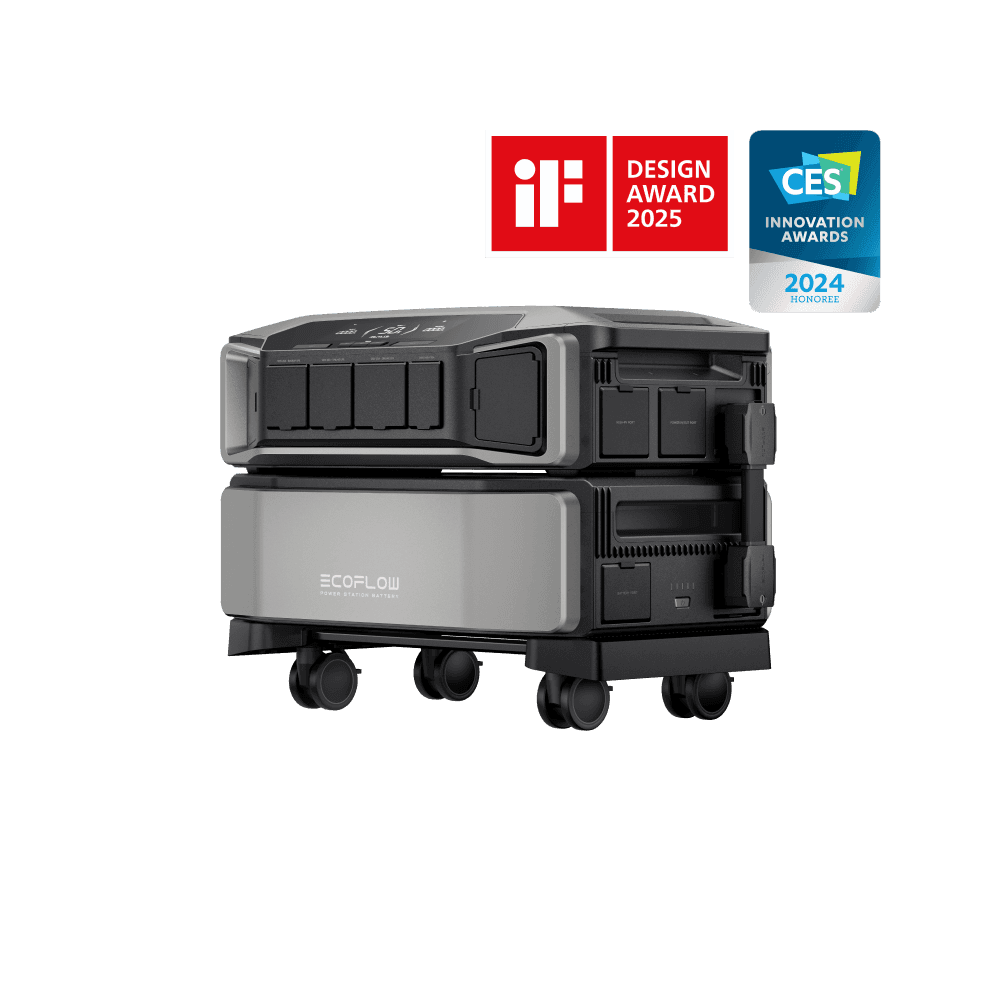
The EcoFlow Delta Pro Ultra is the most capable home backup solar generator you can buy in 2026. With 6,144Wh of LiFePO4 capacity, 7,200W of continuous AC output, and expandability up to 90kWh with additional battery packs, it's designed to be a complete home energy system — not just a portable power station.
What sets the Delta Pro Ultra apart is its Smart Home Panel 2 integration. When paired with EcoFlow's transfer switch, it can automatically back up your home's essential circuits — fridge, lights, router, medical devices — with a switchover time under 20ms. It can also integrate with rooftop solar arrays, making it part of a permanent home energy ecosystem.
The honest trade-offs: at 99 lbs and ~$3,499, this is a premium investment. If you only need to keep phones charged and run a few lights during a short outage, the Delta Pro Ultra is serious overkill. But for homeowners who want genuine whole-home backup with solar charging capability, nothing else comes close.
EcoFlow Delta Pro Ultra
Pros
- 6,144Wh capacity — powers a full-size fridge for 35+ hours
- 7,200W output runs nearly any household appliance including HVAC
- Smart Home Panel 2 integration for automatic whole-home backup
- Expandable to 90kWh — grow your system over years
Cons
- Premium price at ~$3,499 for the base unit
- Heavy at 99 lbs — not designed for portability
- Full ecosystem (panels + transfer switch) adds significant cost
Best Premium Portable — Bluetti AC300 + B300
The Bluetti AC300 + B300 combo delivers serious home backup capability in a modular, expandable package. The AC300 is an inverter-only unit (no internal battery) that pairs with B300 battery modules — each adding 3,072Wh of LiFePO4 capacity. With up to four B300 batteries, you get 12,288Wh of total capacity.
The modular design is the AC300's biggest advantage: start with one B300 ($1,599 for the combo) and add more as your budget and needs grow. The 3,000W continuous output handles fridges, window AC units, and power tools comfortably, with a 6,000W surge for motor startups.
Bluetti's 2,400W maximum solar input means you can pair this with six 400W panels for meaningful off-grid charging. The unit also supports dual AC charging at 5,400W, filling a single B300 battery in about 45 minutes from the wall.
Bluetti AC300 + B300
Pros
- Modular design — expand from 3,072Wh to 12,288Wh over time
- 3,000W output handles most home essentials plus AC units
- 2,400W solar input for fast off-grid recharging
- LiFePO4 with 3,500+ cycle life rating
Cons
- Requires separate B300 battery — higher total system cost
- Combined weight of 137 lbs limits portability
- No built-in screen on AC300 unit (app-dependent for detailed stats)
Best Value — Anker SOLIX F2000
The Anker SOLIX F2000 (also known as the PowerHouse 767) hits a sweet spot between capacity, output, and price. With 2,048Wh, 2,400W continuous output, and a street price around $1,699, it delivers more usable power per dollar than most competitors in its class.
Anker's GaNPrime technology enables fast AC charging — a full recharge in about 1.5 hours from the wall. The 1,000W maximum solar input is moderate, but sufficient for a dual-panel setup. Build quality is excellent, with a proprietary InfiniPower LiFePO4 system rated for 3,000+ cycles.
The F2000 is the right choice if you want strong capacity without paying for expandability features you may never use. It's a self-contained, one-box solution that handles the essential circuits during a multi-day outage.
Anker SOLIX F2000
Pros
- Best price-to-capacity ratio in this roundup
- 2,400W output with 4,600W surge handles fridges and power tools
- Fast 1.5-hour AC recharge via GaNPrime technology
- Trusted brand with strong warranty support
Cons
- Not expandable — 2,048Wh is your maximum
- 1,000W solar input is lower than competitors in this price range
- At 61.5 lbs, still heavy for true portability
Best Portable Powerhouse — Jackery Explorer 2000 Plus
The Jackery Explorer 2000 Plus combines Jackery's legendary ease of use with serious home backup capability. The 2,042Wh LiFePO4 battery and 3,000W output put it in the same league as units costing $500 more, and the expandable battery system lets you scale up to 12kWh.
What Jackery does better than almost anyone is the user experience: the mobile app is intuitive, the display is clear, and setup is plug-and-play. For families who don't want to fuss with technical configurations, this matters. The 2000 Plus also has a strong retail presence — you can find it at Costco, Amazon, and REI, which means accessible customer support.
The 1,400W maximum solar input is competitive, and Jackery's proprietary SolarSaga panels are designed to work seamlessly with the unit. AC wall charging takes about 2 hours for a full recharge.
Jackery Explorer 2000 Plus
Pros
- 3,000W output at a competitive $2,199 price point
- Expandable to 12kWh with add-on battery packs
- Best-in-class user experience and mobile app
- Widely available at major retailers (Costco, Amazon, REI)
Cons
- Base capacity (2,042Wh) is slightly lower than similar-priced competitors
- Add-on batteries are pricey (~$1,099 each for 2kWh)
- Larger physical footprint than Anker F2000 at similar capacity
Best Value Mid-Size — Bluetti AC200MAX
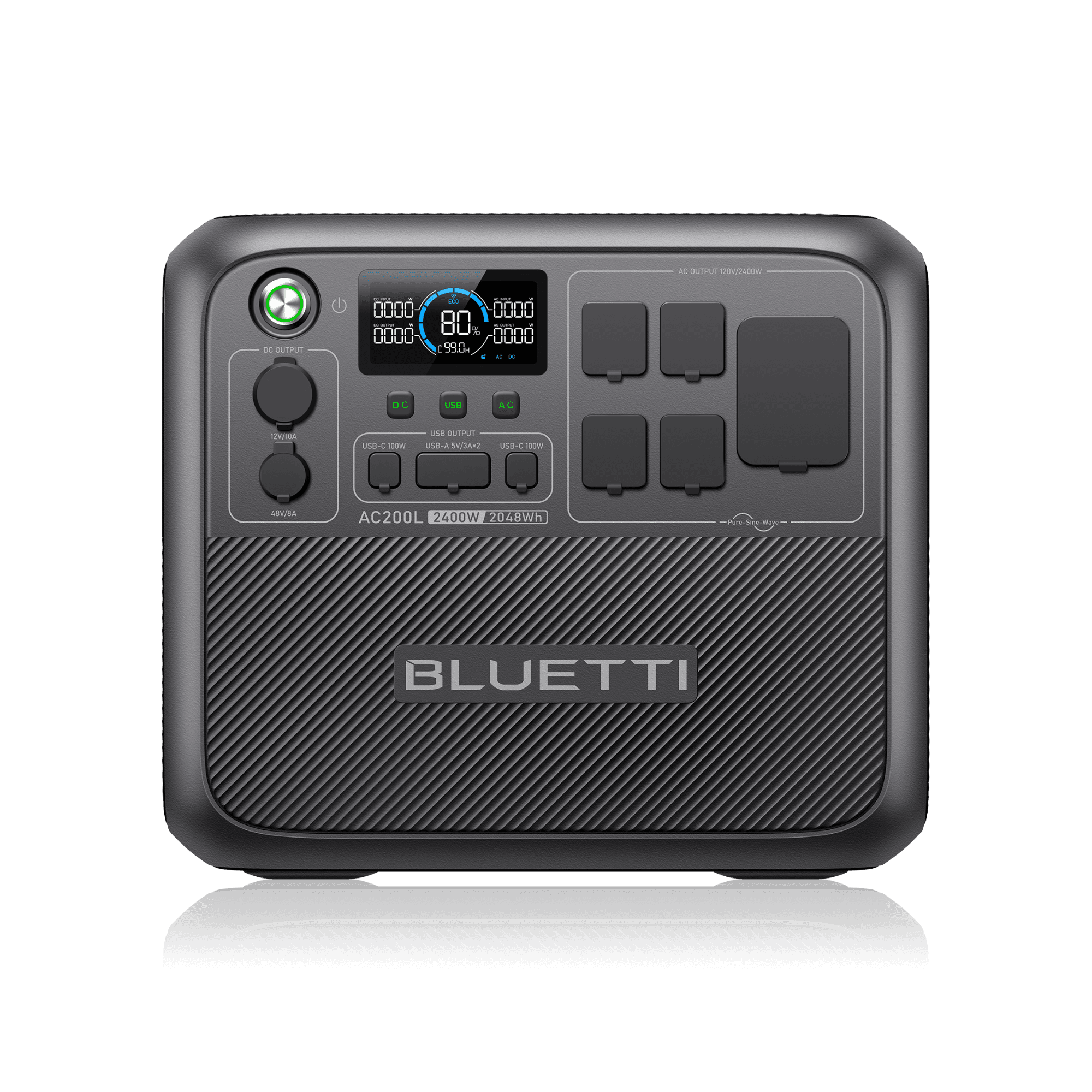
The Bluetti AC200MAX is the workhorse pick for families who want proven reliability at a lower price point. With 2,048Wh of LiFePO4 capacity and 2,200W continuous output, it comfortably handles a refrigerator, lights, router, laptops, and phone charging — the essential circuits most families need during an outage.
The AC200MAX has been on the market longer than most units in this roundup, which means a large user community, well-documented real-world performance data, and frequent sales. It regularly drops to $1,299-$1,399 during Black Friday and Prime Day events.
It also accepts up to two B300 expansion batteries (adding up to 6,144Wh), giving it growth potential if your needs increase. The 900W maximum solar input is the lowest in this roundup, so recharging from panels takes longer — plan accordingly.
Bluetti AC200MAX
Pros
- Proven reliability with a large user community and real-world track record
- Expandable to 8,192Wh with B300 battery packs
- Frequent sales bring price to $1,299-$1,399 range
- Solid 2,200W output handles all essential circuits
Cons
- 900W max solar input means slower panel recharging
- Older design lacks some smart features of newer competitors
- Heavier than newer units with similar capacity (61.9 lbs)
Best Starter Pick — Jackery Explorer 1000 Plus
The Jackery Explorer 1000 Plus is the ideal entry point for families new to solar generators. At ~$999 with 1,264Wh of LiFePO4 capacity and 2,000W output, it covers the essentials without a premium price tag.
What you get for under $1,000: enough capacity to run a small refrigerator for about 7 hours, keep phones and laptops charged for days, power LED lights indefinitely, and maintain your router and modem through a 24-hour outage. It won't power your whole house — and it's not trying to. It's designed to be the reliable, affordable unit that every household can justify.
The 1000 Plus is also genuinely portable at reasonable weight, making it a dual-use unit for camping trips and tailgating when it's not on standby at home. Jackery's ecosystem means you can upgrade to a 2000 Plus later and keep the 1000 Plus as a secondary unit or dedicated car kit.
Jackery Explorer 1000 Plus
Pros
- Best price in this roundup at ~$999
- LiFePO4 battery with 4,000 cycle life rating
- 2,000W output handles essential home circuits
- Genuinely portable — practical for camping and car trips
Cons
- 1,264Wh limits runtime to single-day outages for essential use
- 500W max solar input means slow panel recharging
- Not expandable — capacity is fixed
Head-to-Head Comparison
Here's a detailed spec comparison to help you make a final decision. Pay attention to the metrics that matter most for your household: if you need maximum runtime, focus on capacity; if you need to run high-draw appliances, focus on AC output and surge wattage.
Detailed Specifications Comparison
| Feature | |||||
|---|---|---|---|---|---|
| Price | ~$3,499 | ~$2,599 | ~$1,699 | ~$2,199 | ~$1,599 |
| Battery Type | LiFePO4 | LiFePO4 | LiFePO4 | LiFePO4 | LiFePO4 |
| Capacity | 6,144Wh | 3,072Wh | 2,048Wh | 2,042Wh | 2,048Wh |
| Continuous Output | 7,200W | 3,000W | 2,400W | 3,000W | 2,200W |
| Surge Output | 14,400W | 6,000W | 4,600W | 6,000W | 4,800W |
| Max Solar Input | 5,600W | 2,400W | 1,000W | 1,400W | 900W |
| AC Charge Time | ~2.5 hours | ~45 min (dual AC) | ~1.5 hours | ~2 hours | ~2.5 hours |
| Weight | 99 lbs | 137 lbs (combined) | 61.5 lbs | 61.5 lbs | 61.9 lbs |
| UPS Mode | Yes (<20ms) | Yes (<20ms) | Yes (<20ms) | Yes (<20ms) | Yes (<30ms) |
| Expandable | Yes (to 90kWh) | Yes (to 12,288Wh) | No | Yes (to 12,000Wh) | Yes (to 8,192Wh) |
EcoFlow Delta Pro Ultra
~$3,499
- Battery Type
- LiFePO4
- Capacity
- 6,144Wh
- Continuous Output
- 7,200W
- Surge Output
- 14,400W
- Max Solar Input
- 5,600W
- AC Charge Time
- ~2.5 hours
- Weight
- 99 lbs
- UPS Mode
- Yes (<20ms)
- Expandable
- Yes (to 90kWh)
Bluetti AC300 + B300
~$2,599
- Battery Type
- LiFePO4
- Capacity
- 3,072Wh
- Continuous Output
- 3,000W
- Surge Output
- 6,000W
- Max Solar Input
- 2,400W
- AC Charge Time
- ~45 min (dual AC)
- Weight
- 137 lbs (combined)
- UPS Mode
- Yes (<20ms)
- Expandable
- Yes (to 12,288Wh)
Anker SOLIX F2000
~$1,699
- Battery Type
- LiFePO4
- Capacity
- 2,048Wh
- Continuous Output
- 2,400W
- Surge Output
- 4,600W
- Max Solar Input
- 1,000W
- AC Charge Time
- ~1.5 hours
- Weight
- 61.5 lbs
- UPS Mode
- Yes (<20ms)
- Expandable
- No
Jackery Explorer 2000 Plus
~$2,199
- Battery Type
- LiFePO4
- Capacity
- 2,042Wh
- Continuous Output
- 3,000W
- Surge Output
- 6,000W
- Max Solar Input
- 1,400W
- AC Charge Time
- ~2 hours
- Weight
- 61.5 lbs
- UPS Mode
- Yes (<20ms)
- Expandable
- Yes (to 12,000Wh)
Bluetti AC200MAX
~$1,599
- Battery Type
- LiFePO4
- Capacity
- 2,048Wh
- Continuous Output
- 2,200W
- Surge Output
- 4,800W
- Max Solar Input
- 900W
- AC Charge Time
- ~2.5 hours
- Weight
- 61.9 lbs
- UPS Mode
- Yes (<30ms)
- Expandable
- Yes (to 8,192Wh)
How We Chose These Solar Generators
We evaluated over 15 solar generators currently available in the US market, narrowing to these six based on four weighted criteria: battery capacity and chemistry (30%), AC output and surge handling (25%), solar recharge speed and expandability (25%), and overall value including warranty and brand support (20%).
We prioritized LiFePO4 battery chemistry for its safety profile and longevity (3,000-6,000 cycles vs. 500-800 for NMC). All specs cited are from published manufacturer specifications. Real-world performance will vary based on ambient temperature, load profiles, and battery age. Where possible, we cross-referenced specs with user reviews and independent testing data.
Solar Generator vs. Gas Generator — Which Is Right for You?
Solar generators aren't the right choice for every household. Here's the honest comparison: gas generators produce more sustained power at a lower upfront cost. A quality 5,000W gas generator costs $800-$1,500 and can run indefinitely with fuel. But they're loud (65-75 dB), produce carbon monoxide (never use indoors), require fuel storage, and need regular maintenance.
Solar generators are silent, produce zero emissions, work safely indoors, require virtually no maintenance, and recharge from sunlight. The trade-off is higher cost per watt-hour and slower recharging. For most suburban families preparing for 1-3 day outages, a solar generator is the better fit. For rural homeowners facing potential week-long outages or needing to power well pumps and HVAC systems, a gas generator (or a dual-fuel hybrid) may be more practical.
Related Reading
For a full comparison, see our upcoming guide: Gas Generator vs. Solar Generator — The Complete 2026 Comparison. We'll cover total cost of ownership, runtime calculations, and maintenance requirements in detail.
Frequently Asked Questions
How long will a solar generator power a refrigerator?
A standard full-size refrigerator draws about 150W on average (with startup surges of 400-800W). A 2,000Wh solar generator will keep it running for approximately 11-13 hours after accounting for inverter efficiency losses of 10-15%. A 6,000Wh unit like the EcoFlow Delta Pro Ultra can power a fridge for 35+ hours continuously.
Can a solar generator power an entire house?
It depends on what "entire house" means. A large unit like the EcoFlow Delta Pro Ultra (7,200W) can run essential circuits: fridge, lights, router, phone charging, and even a window AC unit. But it can't run a central HVAC system, electric water heater, and clothes dryer simultaneously. For true whole-home backup including heating and cooling, you'd need a much larger battery system or a traditional standby generator.
How do I recharge a solar generator without sun?
Every generator in this roundup supports AC wall charging — and most do it faster than solar. The Anker F2000 charges fully in 1.5 hours from a standard wall outlet. You can also charge from a car's 12V outlet (much slower, typically 100-400W input) in an emergency. Some units like the EcoFlow Delta Pro Ultra also support generator input for hybrid gas-solar setups.
What size solar generator do I need for home backup?
For a family of four running essentials (fridge, lights, router, devices): minimum 1,500Wh for an overnight outage, 2,000-3,000Wh for a 24-48 hour outage, and 5,000Wh+ for multi-day backup. Our rule of thumb: calculate your daily essential load in watt-hours and multiply by the number of backup days you want.
Are solar generators safe to use indoors?
Yes — this is one of their biggest advantages over gas generators. Solar generators produce zero emissions and are completely safe for indoor use. LiFePO4 batteries have excellent thermal stability and don't off-gas under normal conditions. Just keep them in a dry, ventilated area away from direct heat sources.
Is a solar generator worth it for a 1-2 day power outage?
Absolutely — this is their ideal use case. A $999-$1,699 solar generator will comfortably cover 1-2 day outages for a typical household's essentials. When you factor in the cost of spoiled food from even one extended outage ($200-$500 for a full fridge and freezer), a solar generator pays for itself surprisingly quickly. Unlike gas generators, there's no ongoing fuel cost, and LiFePO4 batteries last 10-15 years with proper care.
EcoFlow Delta Pro Ultra
9.5
out of 10Capacity10.0
Recharge Speed9.5
Portability6.0
Expandability10.0
Value8.0
Our Verdict
The ultimate whole-home backup solution. Unmatched expandability to 90kWh and 7,200W output justify the premium for serious preparedness.
Anker SOLIX F2000
9.0
out of 10Capacity8.5
Recharge Speed8.5
Portability8.0
Expandability8.0
Value9.5
Our Verdict
Best overall value for most homeowners. Strong capacity and UPS mode at a price that does not require a second mortgage.
Bluetti AC300 + B300
8.8
out of 10Capacity9.0
Recharge Speed8.5
Portability7.0
Expandability9.5
Value8.5
Our Verdict
Excellent modular system with strong expandability. The split inverter-battery design offers flexible placement options.
Frequently Asked Questions
Final Verdict
For most homeowners, the Anker SOLIX F2000 offers the best combination of capacity, output, and value at ~$1,699. It's our "set it and forget it" recommendation — plug it in, turn on UPS mode, and it's ready when you need it.
If you want the absolute best whole-home backup with room to grow, the EcoFlow Delta Pro Ultra is the clear winner at ~$3,499. And if you're just getting started with emergency preparedness on a budget, the Jackery Explorer 1000 Plus at ~$999 covers the essentials without overcommitting.
Whatever you choose, the best solar generator is the one you actually have charged and ready when the power goes out. Start with what fits your budget today — you can always upgrade later.
Where to Buy
We may earn a commission when you purchase through these links, at no extra cost to you. This supports our independent research.
Related Articles
Solar Generators
Comparison
Best Solar Generators for Home Backup Power: 2026 Update
We compared the top solar generators for home backup in 2026 — capacity, output, expandability, and value. Picks from EcoFlow, Bluetti, Anker, and Jackery.
Read more →
Solar Generators
Comparison
Solar Generator vs Gas Generator: Which Is Better for Hurricane Season 2026?
Compare solar generators and gas generators for hurricane season 2026 — upfront costs, runtime, safety, and total cost of ownership with our top three solar picks.
Read more →
Solar Generators
Comparison
Best Home Battery Backup Systems: Solar + Storage for Grid Independence (2026)
The top solar + battery backup systems for 2026 compared: capacity, solar input, cost, and IRA tax credit eligibility.
Read more →

Emergency Food
Guide
Growing Your Own Emergency Food Garden: A Beginner's Guide
Learn how to grow an emergency food garden as a beginner — best crops, planting calendar, seed saving, and how to store what you grow for year-round food security.
Read more →