Solar GeneratorsComparison
Best Whole-Home Backup Power Systems (2026): Generators vs Solar vs Battery
Compare the top whole-home backup power systems for 2026: EcoFlow, Bluetti, Jackery, Anker, and Goal Zero. Includes generator vs battery vs solar analysis.
By Editorial Team6 min read
Affiliate Disclosure: This article contains affiliate links. We may earn a commission if you purchase through these links, at no extra cost to you. Our editorial recommendations are independent of these partnerships. Learn about our editorial standards.
Key Takeaways
- 1EcoFlow Delta Pro Ultra is best for whole-home backup — expandable to 90kWh with 7,200W continuous output
- 2Bluetti AC300 + B300 offers the best modular design — split inverter and battery allow flexible placement
- 3Solar + battery beats gas generators for most homes: silent, zero emissions, safe indoors, lower long-term cost
- 4Plan for 5,000Wh+ total capacity if you need to run HVAC, or 2,000Wh+ for fridge, lights, and devices
- 5Volt Typhoon cyber threats make home backup power an increasingly urgent investment for 2026
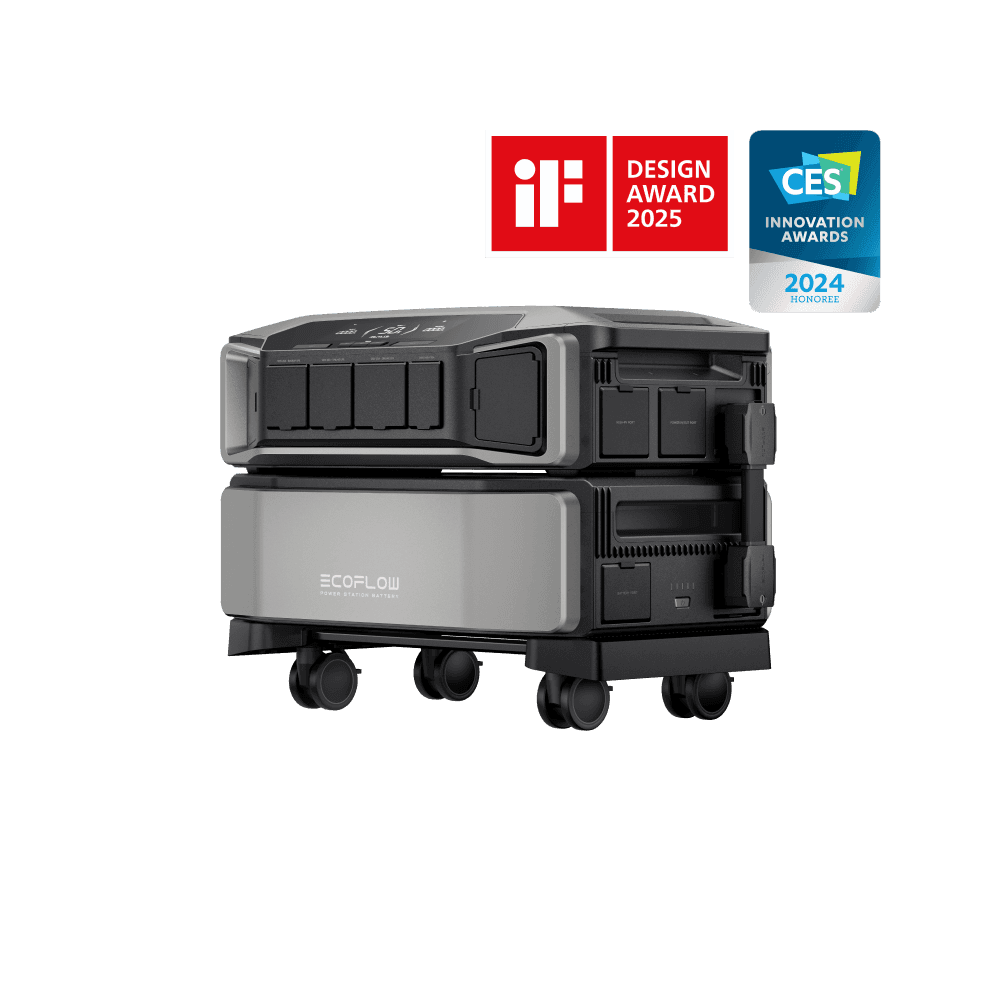
The Best Whole-Home Backup Power Systems for 2026
The Volt Typhoon disclosures changed the way federal agencies talk about grid security — and they should change the way you think about home backup power. CISA confirmed that China-linked hackers were embedded inside more than 20 US utility networks for over 300 days, with persistent access to operational systems that control the grid itself. Combined with NERC's 2025 reliability data showing average US outage durations climbing to 12.8 hours (and rising), the case for serious backup power has never been more concrete.
This guide covers the five best whole-home backup power systems available in 2026 — across battery, solar+battery, and traditional generator approaches — with honest assessments of what each can and can't do for a typical American household.
Quick Summary
- Best overall: EcoFlow Delta Pro Ultra — highest capacity, expandable, whole-home capable
- Best modular system: Bluetti AC300 + B300 — grow your capacity over time
- Best value: Jackery Explorer 2000 Plus — solid performance at a lower price point
- Best ecosystem: Anker SOLIX F2000 — premium build quality and smart home integration
- Best for occasional use: Goal Zero Yeti 1000X — reliable, approachable, simpler feature set
How We Evaluated These Systems
We evaluated each system against the needs of a typical suburban household facing a 3–7 day power outage.
Capacity: Measured in watt-hours (Wh) or kilowatt-hours (kWh). A standard US home uses approximately 30 kWh per day, but "essential only" mode — refrigerator, lights, phone charging, medical devices — typically drops to 5–10 kWh per day.
Output Power: Measured in watts (W). This determines which appliances can run simultaneously. A refrigerator draws 150–200W average but 600–800W at startup.
Expandability: Can you add battery capacity over time? Expandable systems let you start affordably and grow.
Recharging Options: AC (wall outlet), DC (car), and solar. Systems that support all three — and especially high-wattage solar input — are most resilient during extended grid-down scenarios.
Whole-Home Integration: Can the unit connect to a home transfer switch, allowing it to power your home's wiring rather than individual plug-in devices?
Whole-Home Backup Power Systems — 2026 Comparison
| Feature | |||||
|---|---|---|---|---|---|
| Price | ~$5,499 | ~$3,699 | ~$2,299 | ~$1,999 | ~$1,399 |
| Capacity | 6,144Wh (expandable to 21.5kWh) | 3,072Wh per B300 (expandable) | 2,042Wh (expandable to 12kWh) | 2,048Wh (expandable to 4.1kWh) | 983Wh |
| Max Output | 7,200W | 3,000W | 3,000W | 2,400W | 2,000W |
| Solar Input | 5,600W | 2,400W | 1,200W | 1,000W | 600W |
| Best For | Whole-home, high-demand households | Modular growth, mid-size homes | Value-focused families | Smart home integration | Occasional backup, smaller loads |
EcoFlow Delta Pro Ultra
~$5,499
- Capacity
- 6,144Wh (expandable to 21.5kWh)
- Max Output
- 7,200W
- Solar Input
- 5,600W
- Best For
- Whole-home, high-demand households
Bluetti AC300 + B300
~$3,699
- Capacity
- 3,072Wh per B300 (expandable)
- Max Output
- 3,000W
- Solar Input
- 2,400W
- Best For
- Modular growth, mid-size homes
Jackery Explorer 2000 Plus
~$2,299
- Capacity
- 2,042Wh (expandable to 12kWh)
- Max Output
- 3,000W
- Solar Input
- 1,200W
- Best For
- Value-focused families
Anker SOLIX F2000
~$1,999
- Capacity
- 2,048Wh (expandable to 4.1kWh)
- Max Output
- 2,400W
- Solar Input
- 1,000W
- Best For
- Smart home integration
Goal Zero Yeti 1000X
~$1,399
- Capacity
- 983Wh
- Max Output
- 2,000W
- Solar Input
- 600W
- Best For
- Occasional backup, smaller loads
Generators vs. Battery Systems vs. Solar: Which Approach Is Right?
Traditional Standby Generators
A natural gas or propane standby generator connects permanently to your home's electrical panel and kicks on automatically within seconds of a power failure. The Generac Guardian series (starting around $2,000–$5,000 for the unit, plus $3,000–$5,000 for professional installation) is the category standard. These systems can power an entire home indefinitely, provided you have fuel.
The significant limitations: installation is expensive and requires a licensed electrician and gas line connection; generators are loud (typically 65–70 dB); they emit carbon monoxide and must be located outdoors; and they depend on natural gas or propane supply, which can be disrupted during regional emergencies.
Battery-Based Power Stations
The products reviewed in this guide fall primarily into this category. These are large lithium battery systems that store electricity and deliver it during outages. They're silent, emission-free, safe for indoor use, and can recharge from solar panels, making them truly self-sustaining during extended outages.
Solar + Battery Hybrid Systems
The products in this review all support solar charging. When paired with a rooftop or portable solar array, a battery power station can recharge continuously from the sun — turning a finite battery reserve into an indefinite power supply in most weather conditions. This is the most resilient long-term approach.
What Does 'Whole-Home Backup' Actually Mean?
"Whole-home backup" most accurately means the system is capable of connecting to your home's electrical panel via a transfer switch, powering your home's wiring rather than just individual plug-in devices. The EcoFlow Delta Pro Ultra supports this via the EcoFlow Smart Home Panel. Other units in this review power devices via direct outlet connections and extension cords.
EcoFlow Delta Pro Ultra: Best Overall
The EcoFlow Delta Pro Ultra is the most capable consumer-grade backup power system currently available. Its 6,144Wh base capacity can be expanded to 21,504Wh by adding extra battery modules, and its 7,200W output handles virtually any residential load — including central air conditioning, electric water heaters, and high-draw appliances.
What sets the Delta Pro Ultra apart in 2026 is its ability to function as a genuine whole-home backup system through EcoFlow's Smart Home Panel. With the panel installed, the unit seamlessly switches your home's circuits to battery power within 30 milliseconds of a grid failure. Solar input is the other standout specification: up to 5,600W of panel input means a substantial solar array can recharge the base unit in approximately one to two hours on a clear day.
EcoFlow Delta Pro Ultra
Pros
- 6,144Wh base capacity expandable to 21,504Wh — highest in consumer category
- 7,200W output handles central AC, electric ranges, and high-draw loads
- Compatible with EcoFlow Smart Home Panel for seamless whole-home integration
- 5,600W solar input — fastest recharge from solar of any unit reviewed
- LFP chemistry: rated for 3,500+ charge cycles, approximately 10 years of daily use
Cons
- Highest price point in the category (~$5,499 for unit alone, plus panel installation)
- Heavy at 176 lbs — not portable; requires permanent or semi-permanent placement
- Smart Home Panel installation adds cost and complexity
- Overkill for households with modest power needs
Bluetti AC300 + B300: Best Modular System
The Bluetti AC300 + B300 separates the inverter (AC300) from the battery (B300), allowing you to start with one 3,072Wh battery module and add up to three more for a total of 12,288Wh of capacity. This makes it the best choice for households that want to build their backup power system incrementally over time.
The AC300 unit delivers 3,000W of continuous output — enough for a refrigerator, lighting, phone charging, fans, and most medical devices simultaneously. Bluetti's solar input at 2,400W is strong for the category. The system also supports dual AC input (two AC300s can be stacked for 6,000W combined output).
Bluetti AC300 + B300
Pros
- Modular design: start with one B300 battery and expand capacity over time
- 3,072Wh per B300 module; up to 12,288Wh with four modules
- Two AC300 units can be stacked for 6,000W output and 24.5kWh capacity
- LFP chemistry: rated 3,500+ charge cycles
- More affordable entry point than Delta Pro Ultra (~$3,699 for AC300 + one B300)
Cons
- 3,000W continuous output is a limitation for high-draw loads (central AC, electric stove)
- Multi-unit/multi-module configurations get bulky and expensive
- No integrated Smart Home Panel equivalent — requires more manual management
Jackery Explorer 2000 Plus: Best Value
The Jackery Explorer 2000 Plus delivers 2,042Wh of capacity and 3,000W of output at approximately $2,299 — making it the strongest value proposition in this comparison. It's also expandable: you can add up to five extra battery packs to reach approximately 12kWh of total capacity. At roughly 46 lbs, it's meaningfully more portable than the EcoFlow or Bluetti.
Jackery Explorer 2000 Plus
Pros
- Strong value: 2,042Wh and 3,000W output at a lower price point than competitors
- Expandable to ~12kWh with additional battery packs
- More portable than whole-home units at ~46 lbs base
- Quiet and emission-free — safe for indoor use
Cons
- 1,200W solar input ceiling — slower solar recharge than EcoFlow or Bluetti
- No native home panel integration (powers devices via outlets/extension cords only)
- 2,042Wh base is adequate for essential loads but thin for 5+ day scenarios without solar
Anker SOLIX F2000: Best Smart Home Integration
The Anker SOLIX F2000 offers 2,048Wh of capacity and 2,400W of output, with a standout focus on smart home integration and build quality. Anker's ecosystem — including the SOLIX app with real-time energy monitoring, load management, and scheduling — makes it the most sophisticated in terms of software-driven management.
Anker SOLIX F2000
Pros
- Premium build quality and fit/finish
- Best-in-class smart app with energy monitoring, scheduling, and load management
- 2,400W output handles most essential household loads
- Competitive pricing at ~$1,999
Cons
- 2,048Wh base capacity — limited expansion range (max ~4kWh)
- 1,000W solar input is the lowest in this comparison — slower renewable recharge
- 2,400W output ceiling excludes high-draw loads like central AC
Goal Zero Yeti 1000X: Best for Occasional Use
The Goal Zero Yeti 1000X is the smallest and most approachable unit in this comparison, with 983Wh of capacity and up to 2,000W of output. It doesn't have expandable capacity, which limits it as a whole-home solution — but for households that experience infrequent, shorter outages, it's a well-built and trustworthy option with a strong reputation for durability and customer support.
Goal Zero Yeti 1000X
Pros
- Reputable brand with excellent customer support track record
- 2,000W output handles most essential appliances individually
- Simpler feature set — easy to use without technical knowledge
- Good for dual-use: camping, tailgating, worksite, and emergency backup
Cons
- 983Wh is the smallest capacity in this comparison — limited to ~12–18 hours of refrigerator runtime
- No battery expansion option — what you buy is what you get
- 600W solar input — slowest recharge from solar in the comparison
- Value per watt-hour is lower than Jackery Explorer 2000 Plus
How to Choose the Right System for Your Home
Decision Framework: Match System to Your Scenario
- Need whole-home coverage with medical equipment or electric heating: EcoFlow Delta Pro Ultra with Smart Home Panel.
- Want maximum capacity with budget flexibility: Bluetti AC300 + B300 (start with one B300, expand later).
- Want the best value for essential-load coverage: Jackery Explorer 2000 Plus.
- Smart home integration and brand reliability are top priorities: Anker SOLIX F2000.
- Needs are occasional and modest: Goal Zero Yeti 1000X.
Solar Panel Pairing: Any of these units becomes dramatically more capable when paired with an appropriately sized solar array. For a 2,000Wh unit, 400–600W of panel coverage provides meaningful daily recharge in most US climates.
Transfer Switch vs. Direct Connection: A transfer switch installation ($500–$1,500 plus electrician labor) allows your battery unit to power your home's wiring. For the EcoFlow Delta Pro Ultra, the Smart Home Panel makes this practical at scale.
Load Management: Knowing your appliance wattages lets you prioritize during an outage. A Kill-A-Watt meter ($20–$30 at hardware stores) measures real-world consumption of any plugged-in device.
Frequently Asked Questions
How long will a 2,000Wh power station power my refrigerator?
A modern Energy Star refrigerator draws approximately 150–200W on average. In practice, a 2,000Wh unit powers a typical refrigerator for approximately 10–15 hours of total runtime.
Can these battery systems power central air conditioning?
Most central AC systems require 3,500–5,000W to start and 1,500–3,000W to run continuously — loads that exceed most battery units in this comparison except the EcoFlow Delta Pro Ultra (7,200W output). Even with the Delta Pro Ultra, running central AC for an extended period will deplete a 6,144Wh battery in 2–4 hours.
Is a whole-home battery system worth the investment over a gas generator?
A gas generator provides more raw watts for less money and is indefinitely fueled as long as you have gasoline or propane. A battery system is quieter, emission-free, safer for indoor use, and can recharge from solar. For most suburban households prioritizing convenience, safety, and renewable integration, a battery system in the 2,000–6,000Wh range is a better long-term choice.
Do I need a professional electrician to install these systems?
For direct-connection use — plugging appliances into the unit's outlets — no installation is required. For whole-home integration via a transfer switch, yes — a licensed electrician must install the transfer switch and connect the unit to your panel.
How do battery power station warranties compare?
The products in this comparison carry manufacturer warranties ranging from 2 to 5 years. LFP batteries are rated for 3,500+ charge cycles — meaning approximately 10 years of daily use before capacity degrades to 80%. Goal Zero uses a different battery chemistry with a shorter rated cycle life.
What happens if a unit fails during an emergency?
All manufacturers reviewed offer replacement and repair programs, though turnaround time during a widespread emergency could be extended. The practical mitigation is to test your unit periodically — run it through a charge/discharge cycle every few months. Many users keep a smaller secondary unit as a backup to their primary system.
EcoFlow Delta Pro Ultra
9.4
out of 10Capacity10.0
Output Power9.5
Expandability10.0
Installation Ease7.5
Value8.0
Our Verdict
The most capable whole-home backup system available. Expandable to 90kWh for true whole-home coverage including HVAC.
Bluetti AC300 + B300
9.0
out of 10Capacity9.0
Output Power8.5
Expandability9.5
Installation Ease8.5
Value8.5
Our Verdict
Best modular approach with separate inverter and battery units. Excellent for homes where flexible placement matters.
Frequently Asked Questions
Bottom Line
The Volt Typhoon disclosures are the clearest signal yet that critical infrastructure risk is not a distant hypothetical — it's an ongoing reality. Whether or not a grid cyberattack materializes, the underlying case for home backup power has never been stronger.
For most families, the right whole-home backup strategy starts with a mid-to-large capacity battery power station, paired with portable or rooftop solar panels. The EcoFlow Delta Pro Ultra is the best choice for the most capable system; the Bluetti AC300 + B300 is the best modular option; and the Jackery Explorer 2000 Plus offers the best value for straightforward essential-load needs.
whole home backup power systemwhole home generatorhome battery backupbest backup power 2026solar battery backupEcoFlow Delta Pro UltraBluetti AC300Jackery Explorer 2000 PlusAnker SOLIX F2000Goal Zero Yeti
Where to Buy
We may earn a commission when you purchase through these links, at no extra cost to you. This supports our independent research.
Related Articles
Solar Generators
Comparison
Best Solar Generators for Home Backup Power: 2026 Update
We compared the top solar generators for home backup in 2026 — capacity, output, expandability, and value. Picks from EcoFlow, Bluetti, Anker, and Jackery.
Read more →
Solar Generators
Comparison
Solar Generator vs Gas Generator: Which Is Better for Hurricane Season 2026?
Compare solar generators and gas generators for hurricane season 2026 — upfront costs, runtime, safety, and total cost of ownership with our top three solar picks.
Read more →
Solar Generators
Comparison
Best Home Battery Backup Systems: Solar + Storage for Grid Independence (2026)
The top solar + battery backup systems for 2026 compared: capacity, solar input, cost, and IRA tax credit eligibility.
Read more →